Spectrum

White light

Split into colours

Created by sunlight

Rainbows glow

Chemicals create different colours, sodium used in street lights glows yellow. Chemicals are used in fireworks, like strontium (red?) or copper green, creating different colours, blues, purples, oranges.

The reason sunlight is made up of a spectrum is because the sun is made not only of hydrogen and helium but all the chemicals in the periodic table up to iron (any chemicals beyond that can only be created in Super Novae explosions). All the chemicals in the sun glow in different colours, which is why they show up when the white light from the sun passed through a prism. If you split the spectrum further you can find dark lines, these are markers of which chemicals are present. The older the star the more chemicals. As a star gets older it starts to burn up its hydrogen and helium. New chemicals are created by atoms fusing together. That’s where new chemicals are made. When you think about it, if it wasn’t for stars burning or exploding we couldn’t exist.

Basis for a drawing

This was the view I was looking at when I did my Sketch earlier on. As you can see things were a lot darker in reality. I looked more at the shapes, concentrating on drawing them in first, then adding trees and branches afterwards. The silver grey seems to sit back in the background, the tones do not match this photo but does that matter? I keep drawing and hope I’m progressing. X

Orange

Today’s prompt for band of sketchers was the colour orange. I gathered a group of things together and used permanent markers to draw it in. I tried to colour the areas without drawing it out first.

Orange is a peculiar colour, some people identify reds as orange, and orange as yellow. Everyone has different eyesight and abilities to differentiate colours. I imagine someone with colour-blindness would just see muddy browns?

digital background

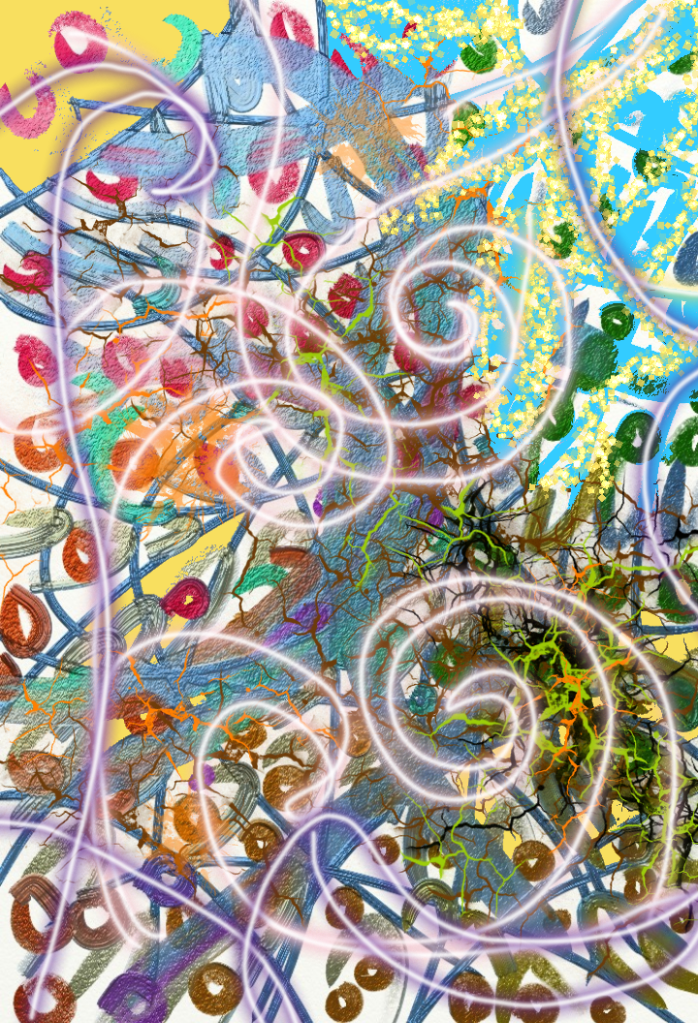
Another doodle, this time a possible background for something, or even a stand alone piece of art. Created in ArtRage oils and sketch app, digital drawing. learning to use different tools in the apps. I did this a while ago. If I’m not learning and playing with things I get really bored.

that’s it for now, I really have tired myself out just sitting at the computer and typing. Need a rest. Phew! Plus I have not had an evening meal yet and I will have to cook it, might be back later if I feel a bit better.

cat and dragon doodle

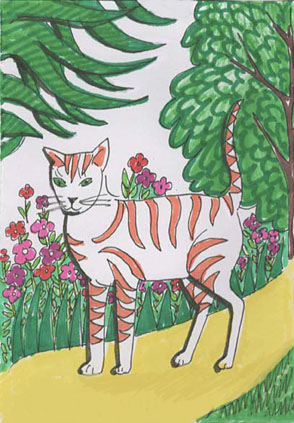
A cat I drew for one of my projects last semester, I seriously need to tidy up my style a bit. Then I have been doodling again ….

Now I’m working on a cheeky dragon for a possible pin badge.

Question? Do you think people would be interested in buying a well drawn and crafted pin badge of a dragon? This is just a sketch…

What colours should dragons be?

My idea is for a spotty dragon, do you think that would work?

what should it be made in, metal or plastic?

Any ideas/ suggestions?

Sketch

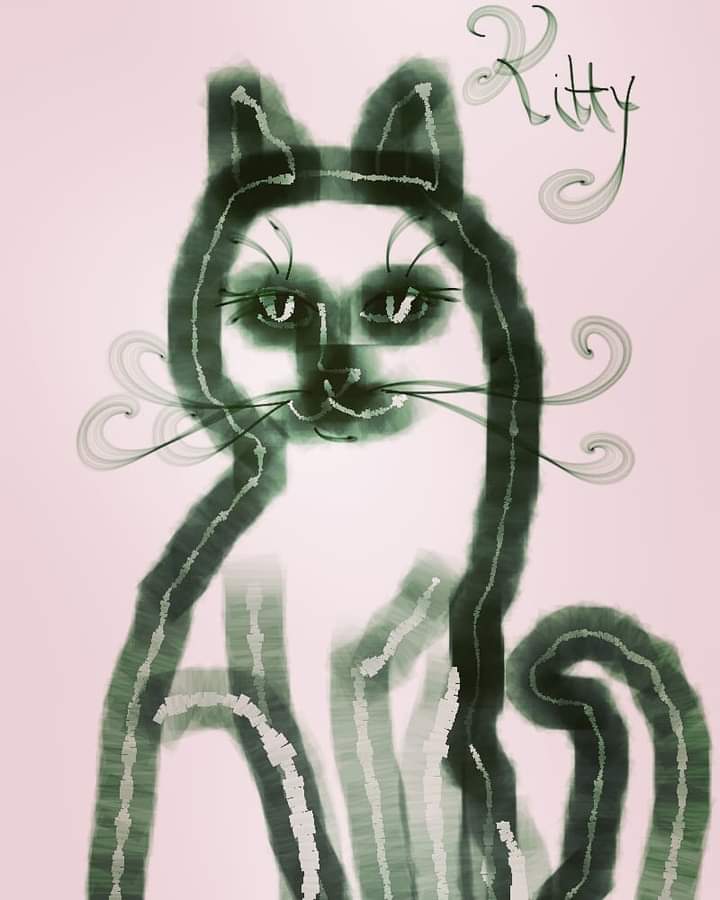
ArtRage oils sketch, edited in Sketch app. 2019. Digital drawing.

I like editing things in one application and then running it through one or two more. In a similar way to using different filters on Photoshop.

I have used lots of different apps over the years but I don’t always remember what I did in each of them which is why they look different each time. I want to find the best selection of drawing tools that I can. I hope they look OK.

Exhibited three years ago.

I mmust have been feeling cheerful when I did these paintings plus a batik picture of some fish. The first bottle oven painting is an attempt to do a clarice cliff design. If I did it now I would make the building more curved. The batik is sort of a Pices idea. The dragonfly was an interesting compositon and the half bottle oven is meant to be mirrored by blue sky or water in a canal. It is slightly remenicent of a yin yang symbol. The exhibition was held at the warehouse at Etruria industrial museum at Etruria, Stoke-on-Trent three years ago. At the moment we cannot use the building because of covid19.

Looking at glass

I was talking to a fellow artist about drawing and painting glass. We discussed whether it has a blue tinge like water but I disagreed. I suggested he looked at the reflection on glass. Sometimes glass is tinted slightly, uranium glass for instance is yellowish, I said I thought it depended on what is added to it when it’s manufactured. I think if you were to put a glass and a plastic bottle next to each other as an exercise and draw what you see you would probably notice stronger reflections on the glass. Also look at shadows, glass, though usually transparent, throws a shadow…instead of using blue to define it I said try using a bit of grey. Observation is very important.