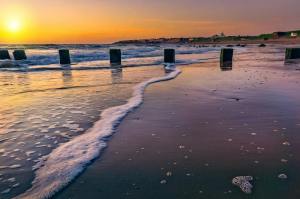
Someone asked a question on Facebook about posts sticking up through a beach in lines.
I have a relative at the coast and had wondered the same thing myself. I asked and found out that they were used to slow something called longshore drift. It’s where over time tides moving along the coast shift sands sideways. Groynes (boards) between the posts held the sand back and stopped the beach being washed away.
In Devon 9 years ago, hubby had an idea to paddle our blow up bed with a trowel to see if he could get across the bay…. not a good idea as the wind was blowing out to sea… he has these odd ideas, which slightly worry me sometimes..
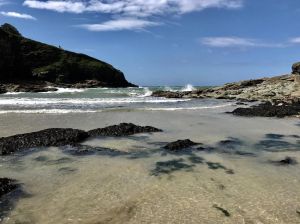
It doesn’t have to be a tropical beach. Just a warm, sunny day. Sandals off, toes sinking slowly into damp sand. Little ripples in the sand mirroring the way the sea has moved over it’s surface. A flat beach, not steeply tipped, but shallow enough that the sea goes out a reasonable distance. Not too much seaweed on the beach, but enough to indicate the sea is healthy. Interesting seashells to collect, starfish and barnacles on the rocks or in rock pools.
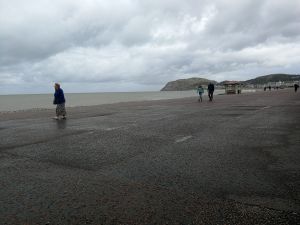
I stand there, breathing in the ozone of the clear air. Thinking of all the other times I’ve visited. Memories of childhood eating ice-cream and paddling in the shallow sea. Looking back at the houses behind the coast road. Stalls to buy candyfloss or sticks of rock, and fish and chips that seagulls clamour for. Remembering the view of the hills in the distance. Thinking of having to catch a train home and wanting to stay forever, come rain or shine. Bright days, sunshine, coastal views, holidays, Heaven.
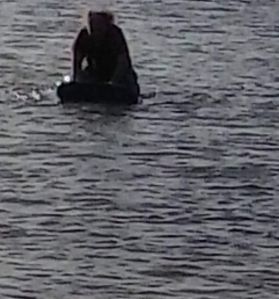
Sitting on a blow up bed, with a trowel for a paddle, my hubby a few years ago decided to paddle across a bay in Devon. I was standing on the beach wondering whether to jump in the sea and drag him home to shore!
Always adventurous, he managed to get back after twenty minutes. He did slide off the bed and kicked for shore. I admired his strength, as the off shore breeze had started to tug him out to sea for a while.
He was grinning happily when he came back up to me on the beach. He enjoyed being adventurous and I was just glad I hadn’t had to call out the coast guard!
Hundreds of miles of the South of England have been badly affected by Storm Ciaran (pronounced kiaron).
Rooves have been torn off, trees uprooted, a branch like a spear pierced the roof of a mobile home and punctured the bed the occupant had just vacated. A woman woke in the storm and grabbed her baby from it’s cot just as the windows blew in. 107 thousand homes had their power cut off. Many have had it restored but 20 thousand are still without electricity.
The channel islands have suspended ferry crossings and their airports are closed. There was a red weather warning indicating danger to life and property.
Meanwhile Northern France was also badly hit by the storm. I think there were wind speeds over 110 miles an hour. We are lucky to be far north of this weather event.
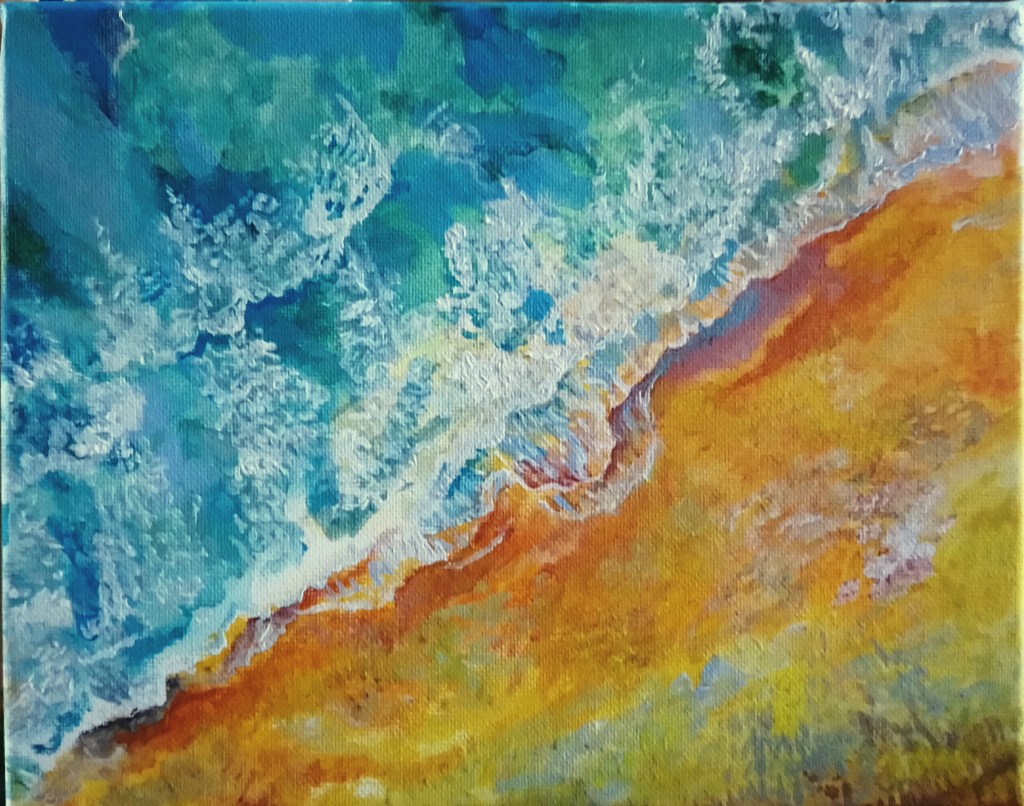
Acrylic on canvas. Devon beach and rocks on an overcast day. I think its near Plymouth, but the painting is probably 20 years old.
The rocks on this part of the coast are dark and craggy. The water makes them darker, with a slight glint to them. They form layers that slope down into the water and there are plenty of rock pools with barnacles and limpets. There might be small crabs lurking under seaweed in them. Between the rocks the sand is sandy coloured (goldish grey). With flat flakes of rock and stones and pebbles in discreet lines rolled into place by the tides. There are also strands of seaweed left at high tide where sand flies and sand hoppers dwell.





 Mallaband-Brown