Old pottery

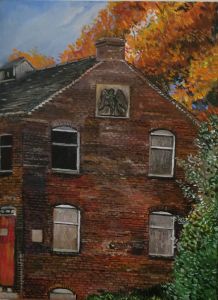
Old buildings in our city don’t always last. They are often left to rot. Trees and bushes grow out of brickwork, splitting the seams and unzipping the building. Making the ancient pottery a ruin.

Some places dismantle buildings. For example the Black Country Museum in Dudley, West Midlands, England. It often numbers each individual brick of a house, or factory, or school and rebuilds it within the grounds of the museum. It has working chain makers and underground canals that run through caves with fossils imbeded in the walls.

Meanwhile our industrial heritage in Stoke on Trent is gradually rotting, or is even burnt down by arsonists. We really should take better care of out industrial archeology even if it means donating it to the black country museum.

Decay

Some of the buildings on the old Spode works site continue to deteriorate while others next to them are being restored and reused.

My fear is that some, like this one, could literally crumble before they get any work on them.

Time moves on, plans have been made and then stopped because they did not fit in well with both the historical significance of Spode works and the surrounding town. The traffic management needs considering too. Meanwhile the buildings need protection and rebuilding.

Too many historical and unique buildings in the city of Stoke-on-Trent have disappeared recently. Destroyed because of disrepair or fire or vandalism. The industrial archeology of the city needs saving. Otherwise we will end up with warehouses or generic apartment buildings and lose our history.

Where Manchester used old Mills to create  loft spaces and apartments, we seem hell bent on hollowing out our citys history.

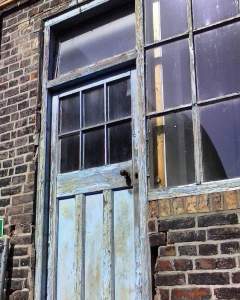
Old door

I took this photo of an old door at Spode pottery five years ago. I guess you could call it shabby. I would not have seen it but there was some work going on at the main entrance to Spode studios so we had to use a side entrance.

I only found this again because of the marvellous Facebook memories. I don’t know how many hundreds or thousands of photos I’ve taken since this, but not that many get put online, so this one must have felt special to me.

I think this might have been a pottery mould store, there was a collection of several thousand old pottery moulds that were a historical record of the shapes of the ceramics Spode used to make. Unfortunately I think they were destroyed a couple of years ago because they were not going to be used again. I think that sort of destruction is unforgivable.

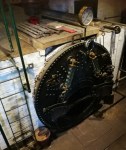
Boiler room

Pressure, boiler, heat.

What a job, to stoke a boiler like this. (Shovelling in coal). I asked my hubby to explain how it works and he tried, but all I got was ‘fire’, ‘water’ and ‘hot air’. I think a boiler full of water lies above the fire and a large tube of hot air sits in the water, somehow the hot air also circulates along the sides of the boiler and smoke goes up the chimney. The fire and hot air heat the water into steam, which then powers a piston, which has hot steam expanding, is pushed down, and is then cooled by water so the pressure releases. And that turns the wheel that turns the gears and belts….. This is a Cornish boiler that is old so it only runs at about 15 pounds per square inch…

So, I hope I got that right and I haven’t made any horrendous mistakes. But having a vague idea of how things work is important I think? Bored yet?

S

Chimneys

Chimneys at Etruria Industrial museum

Looking down from the balcony of Etruria Industrial museum at the Jessie Shirley Bone and Flint mill. I’m not sure what building the large chimney is attached to.

Chimneys and bottle ovens were all over Stoke on Trent in the past. Many of them have been demolished and dismantled. The heritage of the potteries is gradually being destroyed. Maybe for better infrastructure, but our council seems to have fallen in love with multi storey car parks! Not exactly architectural gems I’m afraid.

If you want to find out more about chimneys and them being demolished, it’s worth looking up Fred Dibnah on Google, he was a fascinating man, a steeplejack that became famous blowing up old chimneys. Later programmes were made of him driving steam traction engines and discussing Industrial archeology.

Local industrial archaeology

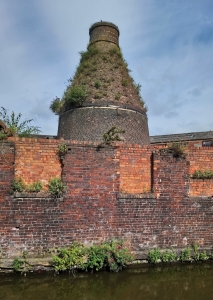
Pottery bottle oven, Longport, Stoke-on-Trent. Next to the Trent and Mersey canal. I can’t remember the name of the pottery sorry. I think there are only 32 of these old pottery ovens left in Stoke-on-Trent. A few, like at Middleport pottery and the Gladstone Pottery museum are preserved and in good condition. Others are derelict or semi derelict. A few are just the bases of them left on the ground. Some are being rescued and repurposed, but others are dreadfully neglected as this one is.

Bottle ovens/kilns and enamel kilns burn at different temperatures. They were different shapes, the enamel ones are thinner. The outside bottle shape has a doorway into it and surrounds a cylindrical kiln where the pottery is placed. The pottery itself is stacked in ‘saggars’- round or oval shaped covers that protect the ceramics as the kiln is ‘fired’. These old fashioned kilns were heated with coal. The clay and fires lead to lung diseases, which were also found in local miners. As coal firing was stopped because of the clean air act many of these potteries closed or converted to gas firing in modern kilns. Old photos from the turn of the 19th century show many bottle ovens all over the city and the pall of smoke they created.

Stoke-on-Trent has clay, water and coal in abundance which is why the pottery industry set up here as well as a few other places in the UK. There are many books about the industrial archaeology of the area are available. Other information can be found at the Potteries Museum and Art Gallery in the city centre (Hanley), Stoke-on-Trent.

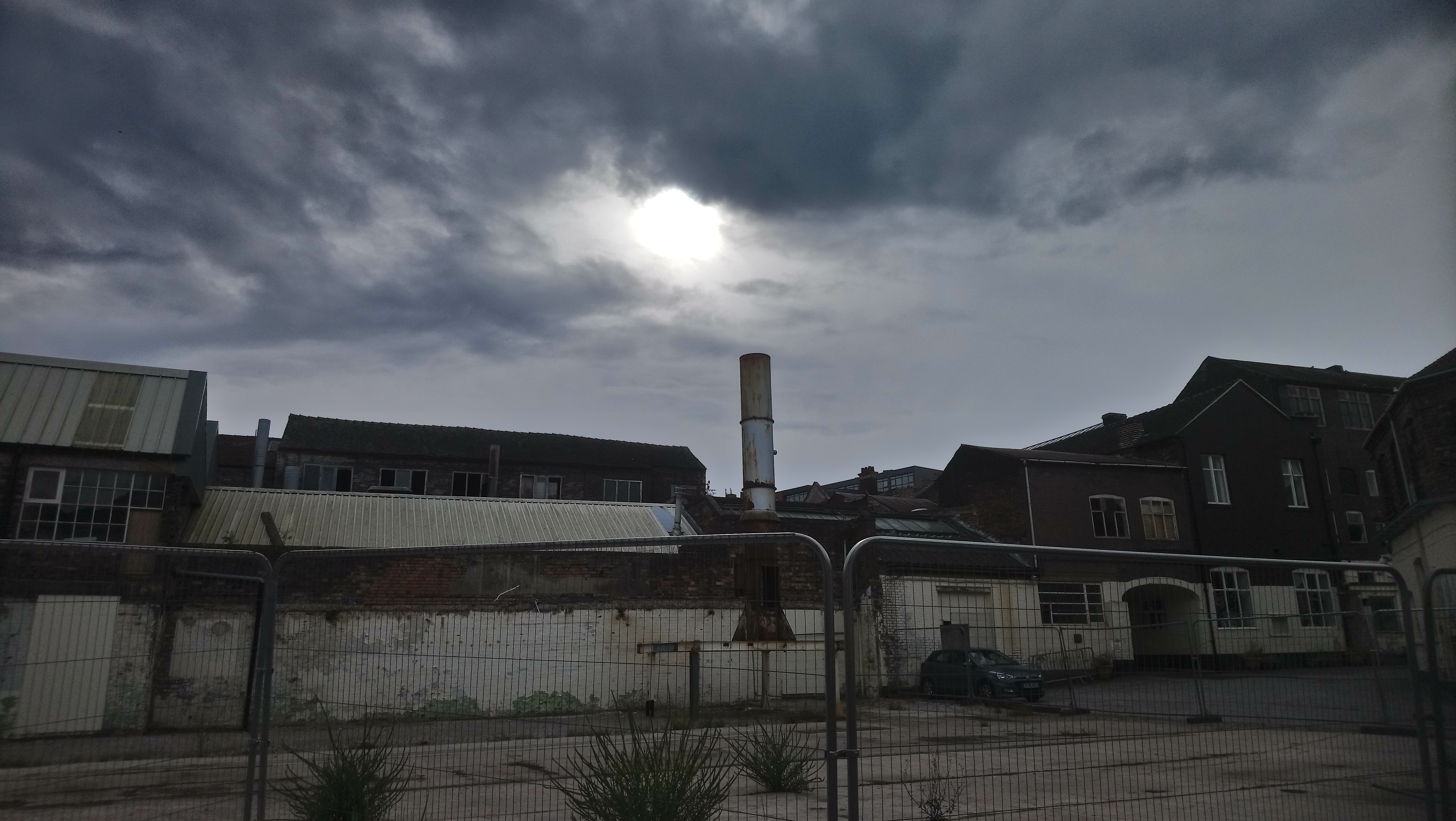
Sun through cloud

IMG_20190821_195945_491

The sun was shining through the clouds at Spode this afternoon giving everything a moody look.

Grey clouds, leaden

A glimmer of sun

Bright, yellow, hot

Sizzles through the clouds.

Humid heat festers

Industrial view languishes

Only a few plants

And a cat sleeping in the dust,

But alive,

Better than ruins.


Today at Spode site

Flowers and old wood

Blocked up windows and peeling paint.

Dasies and dianthus.

A history in brick and slate.

Clay and pottery.

Caged in but released,

Renewed and Revivified.

Pansies and wallflowers shining,

their sunlit faces turned to a bright, chilled sky.

Crumbling with asbestos innards,

But able to be proud again.


Photo walk

About 5 years ago we went on a photo walk around the north of the city of Stoke on Trent in a town called Tunstall. The idea was to do a circular walk encompassing greenways around the town that used to have a rail line and that runs between terraced houses on a raised path. There are bridges over paths and tunnels driven through the ground.

I used my old phone so the images are not brilliant. The day started overcast then it started to snow as we walked along the path. We came out onto the side of a newly built section of road then followed the path round up a hill before coming out at an old pub (can’t remember it’s name) where we stopped off for lunch and sat next to a real coal fire to warm up. Then off through local streets to finish near where we started outside the local health centre.

Photos include trees, train signals, walking along the path. A terraced house. The corrugated side of one of the tunnels. One of the metal greenaway signs, a dandelion growing on the side wall of part of the path, and bracket fungus growing on an old wooden post.

I’m hoping to go on another photo walk, may be when the weather is a bit better. The idea of looking at industrial and post industrial landscapes fascinates me.