Standard Candles

I love this phrase, standard candles, it’s a way of looking at the universe to work out distances in light years.

But I keep getting conspiracy theories about the universe from people on the Internet. I decided to try and explain my point of view.

I explained I’m not a physicist or optical expert. But I’ve read a lot over the years so this is my take on measuring the universe’s size.

This is what I wrote. Please accept my apologies if this is totally wrong. I only have a scant understanding.

I’m no

t an expert in optics but I think they have found the universe is over 13 billion years old based on the time light takes to arrive at earth. The science uses standard candles (globular clusters of stars that have the same light production so they can be used to judge distance because of light intensity). John Gribben explains this well in his popular science books.
Parallax can also be used to measure distance. If you look out of one eye at your thumb at arms length, then at it from your other eye you will see it apparently move. The same can be done from earth observatories. Look at a star at one end of Earth’s orbit around the sun then 6 months later at the other end… Effectively creating a very long thin triangle. The star will move a tiny fraction against the background of other stars. Using simple geometry you can measure the distance. These methods helped to work out how far other galaxies are outside the milky way. I read all of this from books by authors like Issac Asimov, Sir Patrick Moore, Carl Sagan, Brian Cox, and John Gribben among others. Not by watching Fox news.

(the last bit because I was accused of believing things that are on TV)

Justification

I’ve got into a bit of a debate on Facebook about whether the exhaust from airplanes is from water vapour (yes) or chemicals (no). I’ve got especially annoyed since they have said they will be getting rid of fact checkers. I think if you see something on line that does not make sense you should not ignore it but at least put in an alternative realistic point of view. I finished one comment with the words Occams Razor.

Following a series of comments when I rebutted each strange argument with an alternative reasonable comment, someone asked where was I getting my information from? I could of course just said Google. But I don’t. I have had a long life and I like learning information. My memory is very retentive. I can remember telephone numbers from more than 40 years ago (0992 37963) my old home number. I learnt the Greek Alphabet for fun… Alpha, beta, Gamma, delta, epsilon, zeta, eta, theta….. Etc…

So I answered the question, how do I know things by stating :

Mainly science programmes on radio and TV. Reading the new scientist magazine, I’m also interested in the environment and am a member of various nature groups. I’m interested in astronomy. I took science classes at school (biology and chemistry) and had to take physics in one of my diploma courses. I’ve always been interested in science and try and keep abrest of up to date information. My favourite authors when I was growing up were Arthur C Clarke, Issac Asimov, Carl Sagan and Richard Feynman. I enjoy reading biographies of scientists such as Mme Marie Curie and about the Leakies who discovered  the Australopithicine Ape Lucy. I am interested in what’s going on in the world. Does this answer your question? I just enloy thinking things through and trying to understand. If that is wrong I will stop commenting.

I try and be polite and as accurate as I can be.

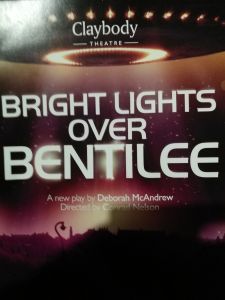
Bright lights over Bentilee

I’ve just got back from the local theatre, Claybody Theatre at The Dipping house, Spode Works, Church Street, Stoke upon Trent, Stoke-on-Trent.

It was a thoroughly enjoyable performance. It was set in 1967 on the Bentilee housing estate, on the edge of the city of Stoke on Trent. A city of potteries and coal mines and steel works that had since suffered industrial decline.

It’s late summer on the estate when several people see a bright glowing light in the sky that goes from red, to slightly greenish to a blue hue. It ended up on TV with locals talking about what they had seen, but no real explanation. (this was the era of science fiction programmes on TV, like The Invaders, or Space family Robinson and even Fireball XL5.)

What I enjoyed was the local knowledge. The speech was real Stoke on Trent accents, with a smidge of Durham and a twang of American or Irish.

I won’t go into detail with spoilers, but there is a mixture of 1960s memories, a touch of romance, a lot of local in jokes. It was useful knowing Bentilee estate, I have worked there. The comedy made the audience chuckle and laughter out loud. I do enjoy Deborah McAndrews writing. The play got a loud round of applause at the end. Good to see local friends who had come out to see it!

Who’s coming to dinner?

If you could host a dinner and anyone you invite was sure to come, who would you invite?

I’d like to invite Albert Einstein, Marie Curie, Carl Sagan and Richard Feynman.

I don’t know if I would be able to understand any conversation between them. But I have noticed that the three men seemed to have funny senses of humour. The two I know most about were Feynman (one of his books is Surely you’re joking Mr Feynman) and Sagan (who wrote Cosmos and Contact among other books).

All of them were interesting people and I hope they would take pity on my lack of knowledge of Physics and the other sciences. Maybe it would be a difficult meal to host. I would research the food they liked and try and replicate it, but I would have to be careful not to cause them stomach problems!

Anyway it’s never going to happen. Fun imagining the guest list though.

Science and Art

What topics do you like to discuss?

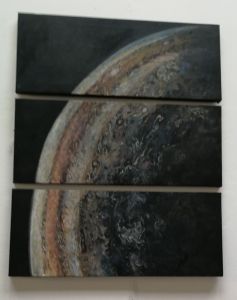
That’s why I like trying to paint astronomical pictures, like this tryptic of Jupiters pole based on the photos by NASAs Juno probe.

I’ve always been interested in both subjects, I wouldn’t say I was an expert, I will always check my facts if I write about science, but I enjoy thinking things through. And having a visual mind helps me imagine how things work.

Art is my first love, I worry that I will find it increasingly difficult to create since my diagnosis with Parkinsons disease. I would be bereft if I could not continue. I hope that better treatment becomes available, another reason for being interested in science

Science

What’s something most people don’t understand?

Science is hard, it is very difficult to understand or often to explain. I think the world is split into people who get science and those that do not.

I don’t know if you have to have a particular brain? I found science hard, and being a girl didn’t push myself forward in classes. The boys always had their hands up shouting me sir, me! Answering the teachers questions.

And yet I eventually found I loved science. I used to watch a BBC programme called Horizon which had a great many subjects from Chemistry to Astrobiology, to the Big Bang as subjects of hourly  shows. Suddenly my interest was piqued. I started to understand things and got more aware of science and it’s ramifications.

I also loved the Sky at Night, a monthly astronomy programme, it’s only short, 20 minutes, but really interesting. And then children’s programmes used to be informative, including the Royal Institution Christmas Lectures. I remember seeing one about magnetic levitation of trains, it was a lecture by Professor Eric Laithwaite. Wonderful.

So my take from this is that you might not like science, but give it a chance, it helps you understand the world..

Joined and left a page

I joined a fun science page on Facebook this week. But soon realised that there were a lot of sceptics there. For everyone discussing a theory five seemed to be completely anti the facts! I should have laughed but I could not believe it! There were people who were anti everything.. I decided to leave the page.

I also posted to a page about clouds and again there was a discussion about chem trails (saying the condensation trails from aircraft have chemicals pumped out of them!). The trails are water vapour condensing around dust and ice particles in the air. My question to the commenter was to fact check his theory, he told me to check mine. What fun. I give up. Maybe science was taught differently in my childhood….

Have I bored you?

Twins?

How do I get readers attention?

Should I write:

Poems, stories about cats, short stories, art, life, Sci fi, a mixture? I try and keep up with the times, but am I boring you? I need to be self critical and also intelligible. Are my posts interesting? I try and be polite, considerate, thoughtful, but I’m probably too old fashioned.

I can’t talk about pop music, and I love science. I try and think things through. I think I must be a nerd

So far this post has been about me (I), but really, what about you?

Have you any suggestions, and ideas, are you interested in knitting or quantum physics? I can’t promise to be able to write about either, but I’m willing to try!

Successful?

When you think of the word “successful,” who’s the first person that comes to mind and why?

It’s taken me ages to decide on a person or group of people to represent this.

I could have chosen a single person, a musician, an actor, sportsperson, vet, doctor, or a news caster, and of course the richest people in the world.

But no, I’ve decided scientists would be the best choice. There success has bought us so many inventions and knowledge. Yes there have been bad inventions too, but these are because of political influence to some extent? Yes, there are bad scientists that either create bad things, or alter the results of research to allow bad things to happen. For example Thalidomide was originally being used for elderly arthritic patients, but to sell more of the drug it was sold to pregnant women as a tablet that would stop morning sickness, with the resultant tetaragenic damage to babies (see the Sunday? Times report into it’s effects).

But then these are weighed against chemistry’s inventions such as the creation of analine dye that led to the discovery of quinine? The invention of batteries, using chemistry and physics. The use of x rays following discoveries by Marie Curie. And biological knowledge including genetic treatments, monoclonal antibodies, knowledge of how our behaviour is damaging the environment.

As with all successes they are balanced with failures. Each person will have their own opinions on this.

Experimenting

What’s your favorite word?

I love experimenting, the word and the action. I’m interested in science and often watch the Royal Institution Christmas lectures where different sciences, from biology, to engineering, forensic science to astronomy. These are described during each series of lectures. Part of the explanation is done through experiments completed with the help of audience members.

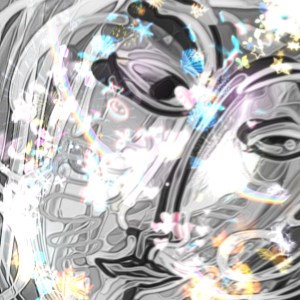
I also love experimenting in art, to the extent that I call myself an experimental fine artist. I enjoy working on an image until I get to an outcome that speaks to me. I don’t think I overwork things, and I do know when to stop, but sometimes I go back and tweak things, change things. I might end up with several images that all mean something to me, then I have to decide which I prefer. My use of digital apps has extended my experimental experiences.