Madness from Russia

🇷🇺

Looking East this morning at the rain I feel sad and worried.

It’s happened. Russia is invading Ukraine. Why? President Putin seems to have become angry with Ukraine getting on with life and decided to try and take it back into a new sort of Soviet Union. However he tries to justify it, it does seem like madness. His troops have even taken over the old chernobil nuclear power station that blew up disastrously (in the 1980’s I think?). Why? If they shell that it could spread nuclear waste across Europe, Ukraine, but also Russia. Why be so mad? Why try and hurt people.

Russia and the West could get on, we could discuss things sensibly, but children, adults, older people are being hurt and killed. Why? What right has one man got to hurt and maim and kill people in a country that he does not control. Perhaps this is more notable to Europeans as it is happening on European soil. It says bad things about us that we neglect what happens in other parts of the World. We leave places to their fate like Syria and Afghanistan. We don’t understand the internal politics and the problems between different factions. How can we deal with anything if we don’t understand. Russias preemptive strikes are frightening and baffling.

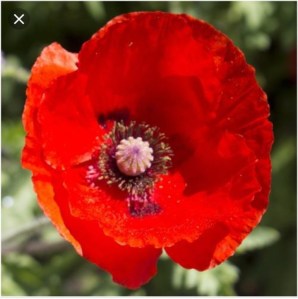
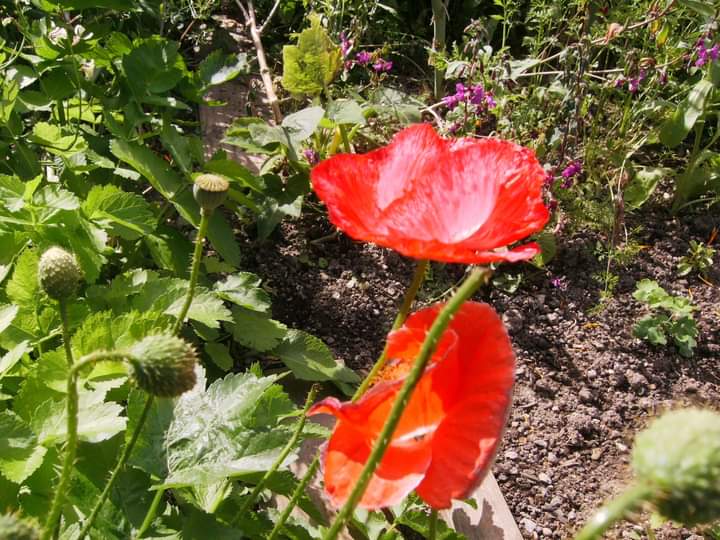
Poppy

I just love them, their colour, brilliance, shape, papery petals. Colourful flowers that are imbued with sorrow because they were used to commemorate wars. They sprang up in the fields of flanders after the battles there. And yet to me they don’t signify fighting or fears, but memories of summers long gone, my favourite colour and how tiny seeds can create such magnificent flowers.

Poppies for remembrance

Poppies germinate in disturbed soil so when the First World War came to an end they sprang up in ‘Flanders fields’. This then became the iconic symbol for armastice day and is used as a way of collecting donations. Paper flowers are sold in shops and by volunteers to raise money for the Royal British Legion charity.

Poppies come in a variety of forms, among which are the common poppy, probably the ones that grew in the fields after the war. Welsh poppies, oranges and yellows. Californian poppies (I’m not sure they are the same plant as I think they are called Escholsia? not Papaver). Oriental poppies, which are grown in some places to make opiates. Himalayan blue poppy (mecanopsis) one of which I managed to grow last year. Then also different garden varieties, perrenials and annuals.

My favourite annual poppy is Shirley. Lots of variety of colours from pale pinks and whites to deep reds and with different shading, also the perrenial Patty’s Plum although it’s colour tends to fade. I also love painting them….

Armistice day

_20191111_210924

Poppies spreading from pole to pole,

Life and death must fight no more.

Let us give each other peace.

Think before we fight a foe.

Peace would be my lasting wish,

Giving back some bit of hope.

I know my wish can never be.

A world in peace I’ll never see.

But maybe once or twice the world

A life to spare, they can agree.

Orphaned lives must be saved,

Refugees must be delivered whole.

Shelter given, an end to fear,

No more war, a fairer share.

No more death of man or beast,

No more fighting,

Let’s have peace.

Flight

_20190903_200526

The light flew across the sky, something not seen for centuries on the Earth.

The world had overheated in the previous millennia, viruses and bacteria had spawned a plague and 90% of the population had died before a cure was found. The remaining humans were all children, the fate of their parents leaving them in a world of technology they could partly use but not maintain.

Then came the explosions, nuclear power plants went offline, nuclear bombs rotted in their silos. Crops and fruit failed. A few books had been left, some technical papers, but the schools were gone. Children grew to adulthood and learnt to hunt and gather like their ancestors. Technology was stored in caves, but without power could not be used.

Then came wars over food and clean water. People living near reservoirs were lucky, but those downstream were cut off as the pumping stations failed. Humans were close to extinction. As the fable said ‘how the mighty had fallen’.

But a few people learned electronics from taking old things apart then putting them back together. They tinkered and played, and a light rose in the sky which was artificial. Who knew what would happen next?

War horse

sketch-1554415645504

I don’t have any photos but I did a quick sketch from my memory of the horse in Warhorse that I went to see tonight.

The play starts with a puppet foal which is quite small. The story shows him being bought and then brought up on a farm in England in 1914. Suddenly the foal becomes a fully grown horse. He is sent along with thousands or possibly millions of horses across to be part of the cavalry in the First World War.

The story charts what happened to him and also his owner who enlists so he can find him.

The horses in the play are depicted by puppets which contain two puppeteers inside them and one moving the head and neck. In scenes where he is galloping extra puppeteers move the four feet. The horses move in realistic ways, flicking it’s ears, moving it’s tail. Rearing and bucking.

There are sections of horrific violence but through it all there is a strong streak of humanity. There are good and bad on both sides. I found myself enthralled  The play seemed to fly by.

I need to mention the other puppets, the goose, swallows flying on the wing, and a first World War tank that were  so well used to depict reality. You forgot there were puppeteers, you just saw the things they were meant to represent. If you get a chance to see it, its worth it.