Gratitudes

What are 5 everyday things that bring you happiness?

Five things that are everyday things?

1. Washing up liquid. Not used to the excess, enough to clean plates and cutlery without polluting the waterways. You can buy ones that are ecologically acceptable. It makes me happy that I can have clean plates.

2. Clean water, to drink, for washing and for bathing. I so lucky to live in a country that mostly has this, although the infrastructure is aging and even here there are some droughts and water shortages.

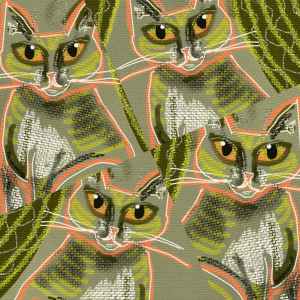
3. Are Cats everyday objects? I have to say they give me great pleasure and happiness. I’m not saying they are perfect, they can be mad, silly, crafty, cheeky. And they are pretty ubiquitous.

4. Electric light. I wish more people could have this, to be able to see at night without using smoky candles or oil lamps. I hope more communities can get solar power. It’s been shown that school children do better when they can see to do their homework. And maybe more solar power for other necessities.

5. Toilets, it’s a little bit delicate to talk about, but we are again lucky to have them here. They help reduce illnesses and ideally people could be given them. I think you can twin with communities through charity to raise funds to build them in poorer societies. I don’t know the details unfortunately.
High school?

Describe something you learned in high school.

I did go to Sixth form at school, but it wasn’t a separate high school. I think things have changed in the UK since I was there. I guess different places in the world run their school systems differently and now Sixth form colleges are often stand alone institutions.

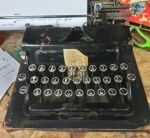
We didn’t have computers when I was at school, they were just coming in when I left. So that’s another thing I didn’t learn! There were typing classes (which I didn’t do) and I think the typewriters were pretty old!

So what did I learn? I did A Levels. One of them was Art, and I loved it. I started to learn about subjects like Pop Art and French Impressionism and Surrealism. It was good to actually learn about the history of art as well as finding out about different techniques. I learned about Andy Warhol and Monet, Cezanne and Salvador Dali. I remember pictures of Campbell soup cans, haystacks and melting clocks. I didn’t learn about female artists though, that came later when I went to college. The Art course made me decide I wanted to do an Art degree, and here I am still being an Artist all these years later.

Leaving work

Describe one positive change you have made in your life.

It was a drastic decision, but I don’t regret it. Each time I thought I knew my job inside out the management changed things. In that sort of situation you could be doing the right thing one day and the wrong the next. That’s the problem with hierarchy, the top decides and the bottom has to implement rules even if they don’t make sense. And each time the goalposts move it’s not likely to be in your favour.

So I found myself out of work, but not regretting it. I had enough money to live on for a while so I set myself up as an artist. Of course I had grand ideas of sales and building a clientele, but at that stage I really didn’t know that my health would not be good. With that and the pandemic (no I haven’t had covid as yet) I found I really didn’t have a business. But I don’t care, I’m away from the humdrum, I’m not being made miserable by rules I don’t like and don’t want to follow. I have had more freedom to be myself than I ever had during the rest of my life. I guess I’m what they call semi retired. A hobbyist? I’d rather paint than do anything else.

Would I reverse the change? Never. I’ve only been back and seen my colleagues a couple of times. The past is the past, let it be!

It was cycling

What’s the most fun way to exercise?

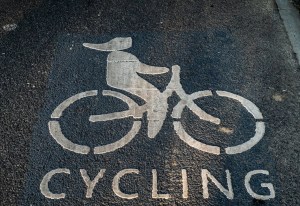
When I was a lot younger my then boyfriend (now hubby) encouraged me to buy a bike because I couldn’t afford a car. We would cycle short distances but gradually I got fitter and we found we would go off into the countryside to enjoy the landscapes or put the bikes on the train and visit our families (both about forty miles away).

But then we started to cycle to and from the family homes, we had both got to the stage where we had got fit and healthy. It’s a great way of getting around and we eventually bought a second hand tandem which was actually two bikes welded together! We manages a hundred mile reliability trial, despite a pedal falling off because one of the chain wheels had been put on back to front. We then got a Gitane tandem, it was much better but the chain was always too slack. We could get up a good speed on it. We would cycle along and down country lanes. Once we ran into a boy scout jamboree, and also a pony trek with ponies stretched across the road up in the Staffordshire moorlands.

My regret? I got knocked off my bike and ended up with a fractured skull. I carried on cycling for a year. But then one day I was cycling up a hill and the bike collapsed underneath me! I took it in for repair and the cycle shop lost my bike for a year! I got it back eventually but I’d got a car and although I still cycled work got in the way and I didn’t use my bike as often. I now can’t get my leg over the bike because my hips are too stiff. I regret losing that fitness and a wonderful exercise.

The Plague Dogs

What book could you read over and over again?

The Plague Dogs is a book by Richard Adams, who also wrote Watership Down.

The book tells the story of Rauf and Snitter, two dogs that are being horribly experimented on at a scientific research center in Cumbria, England. After some time going through dangerous experiments the two dogs manage to escape. They run off into the countryside but are soon pursued by the workers from the centre, police and farmers who have been told that the dogs are infected with Plague.

The story follows their escape and how the story is told in the local paper. On their journey they meet a fox called the Tod. He helps them understand how to evade hounds that are chasing him.

In the end their success or failure, and life or death for the dogs depends on possible skills they learnt back at the research centre.

I don’t remember the story in full as its been a few years since I read it. But when I did it was overnight, from cover to cover. If I can find it or get another copy I will definitely read it again. The atmosphere of the landscape is so well told. If you don’t mind being upset by the details of the experiments and want to read an interesting story please read it.

Robin Hood

If you could be a character from a book or film, who would you be? Why?

I’m not sure when I decided I wanted to be Robin Hood but I was a small child and I used to make bows and arrows out of the mock orange bushes in the garden. The twigs are springy and bent well without breaking, you could also use the straight twigs as arrows. I got quite good at firing them at little targets in the garden.

I guess it all started when I used to watch Robin Hood a programme on the TV starting Richard Green I think. I used to sing along with the theme tune. I also loved the Hollywood films with Errol Flynn and Douglas Fairbanks Junior playing Robin.

I wasn’t really interested in Maid Marion, she had to get Robin to help her escape when the Sherriff of Nottingham captured her. Or she was always doing embroidery or weaving… Boring! I didn’t want to be a boy, but my father used to encourage me to do woodwork and I loved climbing trees. I was good at sport and running when I was young, but I grew out of it and it wasn’t until I got into cycling while I was at college that I got fit again because I cycled everywhere.

So yes, I’d like to have been Robin Hood because there were no exciting female role models except for maybe Emma Peel in the Avengers… That’s another possibility…

Pets….

What animals make the best/worst pets?

First of all, best or worst is a hard question. Basically it will depend on the owner and their capabilities.

Live in a big house with a big garden? The best pet might be a dog or a cat, or even a horse if you have fields for it to roam in. Live in a small flat or a single room apartment? Then your best pet might be a fish or a small snake.

Then it depends on whether you can afford to pay for their food, vets bills or vet insurance. Can you get a pet sitter if you go away on holiday? Someone who is able to come in and check everything is OK? You might have to pay for kennels.

Then you need to think about the pets needs, can it cope with being isolated if its on its own? Does it bark or make loud noises, are you able to exercise it or clean up after it? Will it shed pet hairs, does it eat live food? Are you allergic to it? What is its lifespan? Some small mammals only live a few years, others, like parrots or tortoises might out live you!

The number of pluses and minuses you need to weigh up are important. Don’t get something you won’t want to care for if it gets too big, complicated, old or ill.

Think before you buy (or adopt) it’s your responsibility at the end of the day!

Mural painting.

What job would you do for free?

One of my old murals. I would love to still be doing these and if I had enough money to live on I would volunteer to do things like this for free. Maybe in a children’s ward, or some landscapes for a community centre. I have actually done one or two for free as a volunteer in the past. My first was painting the scenery at my senior school a few decades ago. I wish I’d got photos of it.

My only problem is my health. I can’t move as well as I used to and my balance is not good. I sake a lot so I can’t paint as smooth a line as I did in the past. Age seems to be catching up with me. It’s frustrating because this is the sort of thing I love doing. I get great satisfaction from it. I cannot remember when I didn’t paint or draw. It has been my life when I’ve been able to do it.

Athletics

What Olympic sports do you enjoy watching the most?

I actually like a lot of the sports in the Olympics, and that includes some of the newer sports such as mountain biking and climbing. But I guess my favourites are track and field events (including para athletics). I think that’s because I grew up watching people like Mary Peters and Sebastian Coe among others. So often you would see people beating World and Olympic records. My only regret was when they may have been found to be cheating. Using drugs to enhance their performances. Also I think more modern athletics has too much hype. I know the athletes need to fund their careers, but I liked the simpler times. One of my favourite films is Chariots of Fire. Where athletes were far more moral and honest than some of them appear to be now, or maybe that’s just my perception?

How to change?

How would you improve your community?

How to improve my town? We are a bit of a post industrial area. A lot of industry has gone, mining, steel works, a tyre factory and a lot of the local potteries.

There are a lot of empty industrial buildings that have been left to rot. Our country charges less VAT on new builds than restoring old buildings, so a lot just gets left. We have recently had a spate of fires in these buildings, which is worrying and probably to the advantage of absent owners ( I have no proof they are involved I must add).

Our local government seems set on building apartments and car parks, but whether they are in the right places is open to question. Meanwhile plots of green land are threatened by the builders, and like everywhere else trees are cut down, roads are built and “levelling up” is touted as a great achievement.

But why are potholes in roads left unfilled? Why are historical buildings surrounded by fencing till they fall down, why aren’t crafts and arts, which bring a wealth of creativity into an area encouraged. This was once the centre of pottery in our country, no more? We have lost so much.

Then add trees and environmental improvements to the local canal and river and maybe people would take more pride in their surroundings. I just hope things can improve. It needs LOVE!