Seeing Saturn

sketch-1585179837682

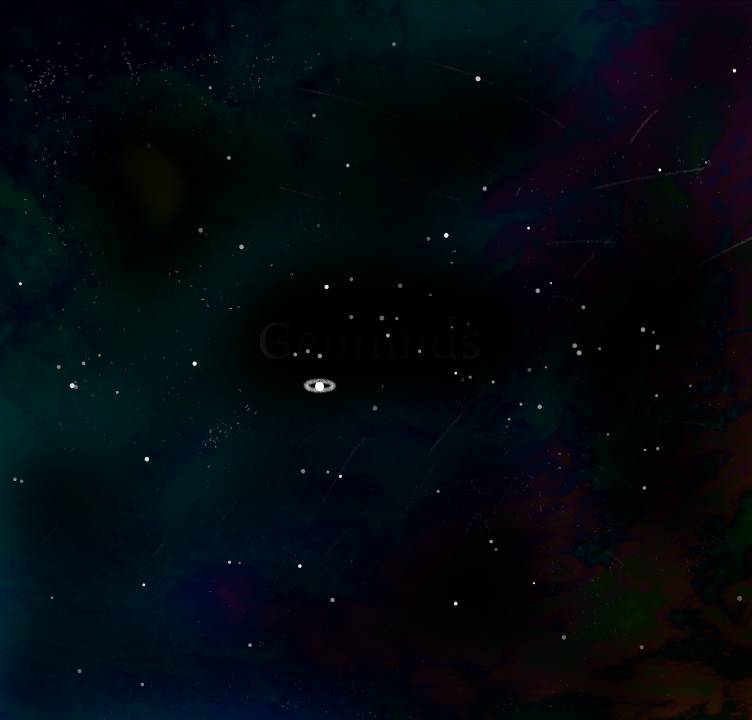
Digital sketch…

Years ago I had the pleasure of using a low powered telescope. I managed to find Juiter and then further away in the darkness was Saturn. It was amazing, the Rings were tipped up so they were much more visible than when they are in the a more horizontal plain. It was tiny, so small, but I could see it wavering slightly in the night air. I think Galileo thought it looked like it had ears?

To see planets with your own eyes, however small they appear is wonderful. The time it takes for the light to get to us means you scan look into the past. So it’s almost like time travel too!

If you ever get the chance, look up and see the sky….

Things to do

sketch-1584608662732

The world is full of bored people. One of the things to do that was posted on Facebook is to close your eyes and choose a book at random. Find page 109  go to the third paragraph and post the first sentence you come to. Also include the author and book title.

Mine was : The radar maps show features of all kinds. (Patrick Moore’s Astronomy), ( teach yourself book)

isbn 978-1-444-10313-7

It’s random, but something to do…..

In other news..

sketch-1584608662732

Digital illustration of a comet. Didn’t want to use someone else’s copyright photo. This is just to give an impression of its colour….

I get alerts from Spaceweather.com about all sorts of astronomical events. I got this alert about a comet this morning. As we are in ‘interesting times’ I thought I would let you know.

Here is a short excerpt with the link:
COMET ATLAS IS BRIGHTENING FASTER THAN EXPECTED: Get ready for a wild ride. Comet ATLAS (C2019 Y4) is plunging toward the sun and, if it doesn’t fly apart first, it could become one of the brightest comets in years. Amateur astronomers are already getting fantastic images as the comet brightens even faster than expected. Visit Spaceweather.com for the full story.

I don’t think the link will work from here, but it’s an easy address to find.

X

Jupiter Blue

FB_IMG_1580173232268

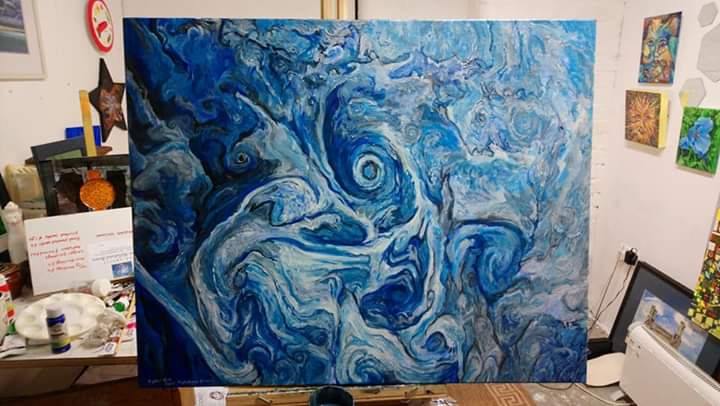
Would you buy a painting of one of the poles of Jupiter? I’ve done a few paintings os astronomical objects. This is from a photo from the Juno probe a few years ago. I’m thinking if doing a ainting of Pluto’s heart. But although I love it I wonder if anyone out there is actually interested. Maybe I’m too interested in tech. I can’t help it though.

It’s not easy to hand paint these images, it takes ages to blend the colours and build them up. Then you have to make sure it’s accurate, although I don’t measure everything exactly. I can’t compete with photography but I do try my best. Anyway this is a large acrylic on canvas and it is for sale.

Twisted sunrise

IMG_20200110_232425_130

Betelguse the star is shrinking.

Fainting they say.

On the shoulder of Orion,

it’s getting fainter.

Red Giant,

stellar wonder,

obese and middle aged?

Perhaps your sides are about to split.

Red Giants can’t stay inflated.

They use up all their fuel.

Puffed up and massive.

Suddenly they can pop like a balloon.

Not enough energy to push out,

the star will fall inwards,

then boom!

Bounce out…

In a million years or so?

You might be a Supernova!

Make a Betelguse nebula.

Then Orions shoulder will flower.

And we may see an exploding star.

The first in the Milky-way since 1604.

Geminids

sketch-1575579002253

We (the Earth) is heading towards a stream of bits of rock from a comet called 3200 Phaethon. This is what  causes the annual Geminid meteor shower. It is expect to peak on December the 13th and 14th. The night before is the full Moon. But the Geminids are bright and can have brilliant fireballs during the shower so they may be visible even through the moonlight. The main problem in the UK is that its often too cloudy to see things like meteor showers. I’ve often stood outside and looked for meteors, but seen nothing.on one occasion long ago we drove off into the night to see if we could get out from underneath the cloud. We drove from Stoke to Buxton and Macclesfield, but to no avail. Apparently they had a good show in Liverpool that night. But we missed it.

Meteor showers can appear at all times of the day, but are best viewed at night. As the Eath turns different bits of it can be pointing into the comet debris at different times of day. Generally they are more visible after local midnight, but one part of the world may see nothing and another part several meteors a minute. It can also be dependent on the width or narrowness of the dust stream.

Happy viewing, wrap up warm!

Jupiter 2009

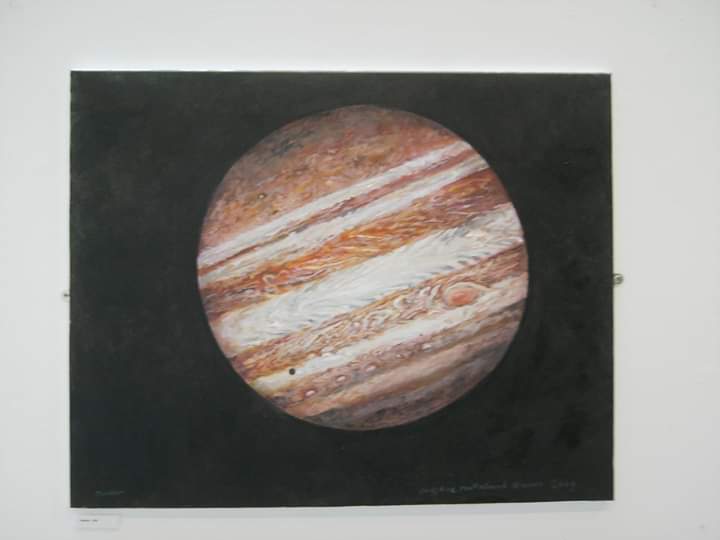
FB_IMG_1572912413208Ten years ago, and before that, I was painting Jupiter. I love the planet, though its atmosphere is hellishly difficult to paint, swirls that meld into one another, colours that blend and merge.

I think I said it was like knitting the painting, because I built it up band by band.

Now I want to do more in the astronomical area. I’m thinking of painting on perspex if I can get the right effects. I woukd do something like the ‘pillars of creation’ dusty nebula. I am thinking of having different layers. How I would display it, and how accurate it would be? I don’t know-yet!

The Orionids

sketch-1571599407817

Coming up on 22nd October 2019 is the Orionid meteor shower. There have already been a few fireballs from the shower and they are due to peak at dawn on the 22nd so it might be worth setting an alarm.

Where do they come from? They are dusty remnants of the comet Halley. They are the dust cloud that came off the comet as it travelled through the solar system. Halley returns on a regular basis. It was identified as a recurring comet by the astronomer Edmund Halley when he realised it was the same comet that had been seen in the sky around the time of the battle of Hastings and then approximately every 100 years or so afterwards.

The meteors (or meteorites if they land) appear to radiate from the area around the star Orion which is why they are called the Orionids. There are other showers of meteors throughout the year. These include the Persids and the Geminids. Some showers are brighter than others. It depends on the debris cloud that the Earth moves through. The dust and debris for showers are in patches of space that the Earth moves through, hence their yearly appearance.

The Orionids apparently move faster than a lot of other meteors so they can create more of a show. The speed increases the friction and they burn up in the atmosphere faster.

You can find out more at a website called Spaceweather.com

Contact

sketch-1570395502427

I’m just watching the film ‘Contact’ starring Jodie Foster. It’s about an astronomer who is searching for alien life. Her search leads her to find an alien signal and the story continues by exploring the affect on humanity.

The story was originally written as a novel by the astronomer Carl Sagan. He was also involved in the NASA Voyager programme, and suggested the spacecraft turned its camera back towards Earth as it headed out of the solar system. He coined the phrase ‘Pale Blue Dot’, when the image showed a single pale blue pixel where Earth sat in the darkness and infinity of space.

I love Sci-fi, and am interested in the possibility of contact with another civilisation. Who knows what might actually happen.

Planet with water vapour.

FB_IMG_1567726422717

On the news tonight. A planet about twice the size of Earth has been found with water vapour in its atmosphere. Its around 100 light years away. Apparently its within the ‘goldilocks’ area around its star so its temperature is between 0°C and 40°C. It would be amazing if there was life there. The latest science is now looking for chemical traces in planetary atmospheres to look for the possibility of life on other planets.

I think the first extra solar planet was found in 1984? Since then about four thousand have been found. There are Hot Jupiter’s that orbit their stars closer than the orbit of Mercury in our solar system. There are cold Jupiter’s, there are also planets like Earth with surfaces that are covered in lava because they are close to their stars. And then there are terrestrial (rocky) planets that are more like the ones in our system.

One thing is certain, there are more planets out there than we know!