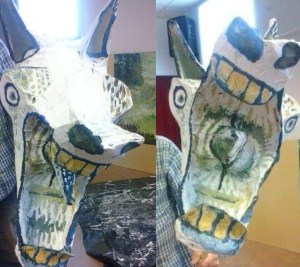
Picassoish horses

Willow and papier mache horse.

The props for the penkhull mystery plays were made using willow withies tied and glued and then covered in paper and glue and painted white, then volunteers decorated them. I had fun giving a couple of horses a Picasso feel. I don’t remember if it was me or another volunteer that painted this one. There were four horses for an apocalyptic scene! I think we made a monster too but these are the photos from 9 years ago off Facebook memories.
Mystery plays

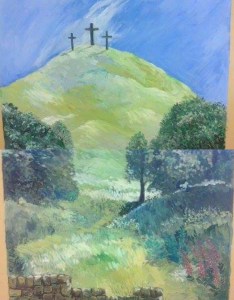
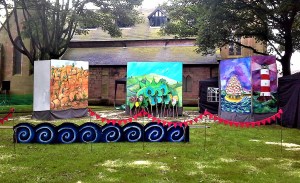
Nine years ago I was helping with penkhull mystery plays. Painting flat boards for scenery and Picassoesque horses which were props for the show. I really miss those days. The plays were sometimes religious or sometimes historical. Covid seems to have ended it. We all got older and it was hard work for the organisers to keep going…

Scenery

For years I painted the scenery for the Penkhull Mystery plays. This one was about the river Trent starting near Stoke on Trent and travelling towards Hull. Each year I would do one or two large sections of painting. The show would start rehearsals in March? And be on in July for one day only on the village green. I miss those days. The excitement as we prepared and made things. Brilliantly directed by Greg Stevens. And organised by him and Kate Barfield. It had everything. Music, acting, tragedy, comedy. Plus morris and molly dancing, a bower of song, a Maypole dance, eukelali players and choirs. I don’t suppose we will do it again?

Thanks to my friend Tim for the photo.

Willow pattern banner

A banner for one of our Penkhull Mystery Plays. We hold them most summers and the one this was painted for was about the pottery industry and its history. This banner was based on the willow pattern famous in the potteries. Spode was one of the factories that made plates and pots with this design, but if you Google ‘willow pattern’ you can find lots of images from many manufacturers.

Blue acrylic paint on a canvas cloth. It took me a while to paint. I also painted the local church and methodist Hall as they would have appeared in the late 19th and early 20th century.