Scientists?

What profession do you admire most and why?

The industrial revolution in Britain and Europe began the transformation of alchemy to science. Inventions were happening and knowledge became more and more important.

As instruments improved things like telescopes and microscopes gave us a better understanding of the micro and macro aspects of life and the universe. We could see smaller and smaller living organisms, such as unicellular plants and animals, and then bacteria and finally viruses.

That understanding gave us vaccinations and antibiotics and began to initiate preventative medicine instead of simply trying to deal with the ravages of Plague and poxes.

There are many branches of science where humans have delved into how things work. They may have started as a philosophical perspective, such as Geography and Meteorology, but then deeper understanding of the underlying issues. Dinosaurs and fossils were discovered. The age of the the Earth extended from the supposed 6000 years since the biblical flood backwards over millions, then billions of years.

Meanwhile Issac Newton was discovering the ‘clockwork’ universe. Where stars moved in their courses. What then happened took decades and centuries, but scientists like Einstein changed the modern world.

I’ve been watching “The Ascent of Man”, by Jacob Bronowski, talking about all the changes and revolutionary things that happened in the last few centuries. It not only covers discoveries, but also how destructive factories could be to humanity. Thankfully not all manufacturers treated their workforces so badly.

I conclusion there is simply too much to discuss about sciences, it is impossible to understand all their aspects. But hopefully we can use science to improve our world, even if it’s only to work out methods that are less destructive to nature.
Spiritually speaking

I think about spirituality sometimes and I question whether it is part of religion or not?

I don’t really know what I believe in. I was brought up as a Christian but I also think there are other aspects of spirit and life that come into your thoughts. I cannot be dogmatic or “born again”, I think you have to question things. Just because the bible says the world was made in seven days does not mean it was. That explanation seems like a simple way of understanding the Earth and the Universe. As we grow and learn we have to take on board science and all the knowledge that has come about over the centuries.

I could be an atheist, and not believe in a God or Gods, but in fact I’m more of an agnostic. I don’t know what I believe in, but if the universe is infinite and “God” is infinite how can I possibly know anyway?

I love John Lennons song “Imagine”, imagine there’s no heaven above us, and no hell below (I don’t think I’ve got the words right). I don’t believe in heaven or hell. I don’t know if there is anything after life, and if there is, what comes after that?

I enjoy Yoga, and we do breathing and meditation exercises. I think that helps me cope with my life. I think there are aspects of spirituality that I could question more, but I don’t know whether I should.

Being logical?

Free media used

What’s your favorite thing about yourself?

I like being logical and working things out. I’ve always been good at guessing who the murderer is in films and programmes like Miss Marple (you can tell from this I’m probably not young). I also enjoy trying to work out who is the criminal in novels like the Brother Cadfael Mysterys by Ellis Peters.

I’m interested in medical mysteries and I like working out what problems people have with their eyes for instance . You can tell by looking at how big their eyes look behind their glasses (bigger eyes-longsighted, smaller eyes-short sighted). So I was fascinated by the TV series House, and also the Mentalist.

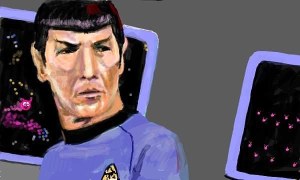
I love Spock in Star Trek and have generally tried to be less emotional, but lately that has been hard to maintain. Even so my hubby calls me Captain Sensible!

Sometimes I overdo it. I’ve suddenly felt the need to pack my shopping bags precisely. Is this too controlling? I think I’m trying to control the uncontrollable, which is really illogical!

I’m interested in science and would love to have more knowledge. I enjoy learning and finding out things. So yes, this is my favourite thing about myself, which actually surprised me, because I thought I would have said art and creativity. But those are imprinted on my DNA. Knowledge though, intruiges me, and makes me want to find out more.

Are you the same person?

Is it a scientific fact? Do all the atoms and molecules in your body get replaced every seven years? Not all at once of course, but over an average lifetime the atoms will be swapped out over about seven years. They must come from somewhere, food, drink, respiration, as we grow up and gain mass, then people tend to shrink a bit as they get older. So obviously people lose atoms and molecules via bodily waste, then blood transports food and oxygen around the body and helps to convey away waste from cells (this is where the lymphatic system is working too). The blood brain barrier prevents blood getting into the nervous system, but there must be a mechanism to get oxygen and other nutrients and waste in and out.

When I first heard the statement I wondered if it could be true? But I’ve heard it again and again. I could fact check it, but I’ll take it as truth. So if molecules can change can we really say we remain the same? Does that not mean that a Leopard CAN change its spots? We can change our minds, change our behaviour. You don’t have to be limited to one train of thought because you literally HAVE changed!

Three books

List three books that have had an impact on you. Why?

Cosmos by Carl Sagan

Surely you’re joking Mr Feynman by Richard Feynman

Chaos by James Gleick

I’m surprised the books I have chosen are all about various science subjects, are all by male writers and all white American writers.

I don’t have a preference for science books or something written by men, but these stuck in my mind because they pushed the boundaries of science fact books.

Cosmos was written in the 1970’s I think, and is a glorious look at the universe and how it is made up. It might not be the most up to date book about astronomy, and obviously we have learnt a lot since it was written, but it got me hooked when I was young and I have two copies of it in the house.

The Richard Feynman book is an autobiography/humourous book. Feynman was a physicist, but the book is much more than a historical retelling of his scientific work. It ranges from his penchant for safe cracking to his interest in art, teaching, and questioning authority. Along the way he talks about nuclear physics. I have another of his books, which is about QED. Quantum Electro Dynamics… No I can’t explain it!

Finally I have chosen Chaos by James Gleick. Chaos is about Chaos theory, it introduced me to fractals and the Mandelbrot set, an infinite pattern of twirling and dizzying shapes that can be created by using a small set of coordinates that make the pattern repeat. I tried drawing patterns using some of the ideas in the book

All three books are 30 or 40 years old but I think they would still hold the interest of someone coming at them from a new interest in science. They helped me navigate some concepts I would never have come across without them. If you feel like expanding your knowledge have a look.

Spock!

Share a story about someone who had a positive impact on your life.

When I was a child I decided to be logical…. Because I saw the character of Spock on TV in a Star Trek and he gave me a love of science and knowledge.

I also think it triggered a love of astronomy together with watching the Sky at Night TV programme (although I never drew Sir Patrick Moore).

All that interest in the world sparked by a science fiction character..

Many things…

Art etc…

What topics do you like to discuss?

If you know my blog, it’s full of different things, ideas, thoughts. I try and explain things sometimes, although I might not have accurate information. But I try and get the gist of things. I like working things out. I also talk a lot about my art (which is what the page was originally set up for). Then I sometimes write poetry, although again, I wouldn’t say I was brilliant at it. And sometimes I write short stories. So all in all I try to vary things and hopefully not be too boring?

I suppose this all reflects a varied, comprehensive education. I’m definitely not a narrow minded specialist. I try and listen to both sides of an argument, but I’m not wholly impartial. If a subject seems important for the world or the environment, I will generally support it. I try not to be fooled. There are a lot of strange ideas out there, and the Internet can be an effective (and bad) way of spreading misinformation.

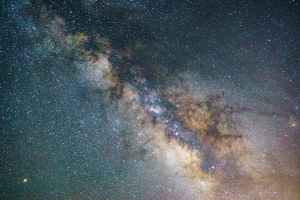
I enjoy science, particularly astronomy. You can find posts I’ve written where I ramble on about things like galaxies or eclipses, or disagreeing with strange ideas about the shape of the Earth.. It’s an oblate spheroid. I have collections of books, glass, paintings and other objects, so I try and keep myself enthusiastic about many and various things. And then there are Cats. That’s a whole separate post…

Recently I’ve talked about my health, but is this the right forum? Will I miraculously come across a solution to my problems? no, I think I just have to get on with things. But I certainly feel supported and I’m grateful for that.

The Plague Dogs

What book could you read over and over again?

The Plague Dogs is a book by Richard Adams, who also wrote Watership Down.

The book tells the story of Rauf and Snitter, two dogs that are being horribly experimented on at a scientific research center in Cumbria, England. After some time going through dangerous experiments the two dogs manage to escape. They run off into the countryside but are soon pursued by the workers from the centre, police and farmers who have been told that the dogs are infected with Plague.

The story follows their escape and how the story is told in the local paper. On their journey they meet a fox called the Tod. He helps them understand how to evade hounds that are chasing him.

In the end their success or failure, and life or death for the dogs depends on possible skills they learnt back at the research centre.

I don’t remember the story in full as its been a few years since I read it. But when I did it was overnight, from cover to cover. If I can find it or get another copy I will definitely read it again. The atmosphere of the landscape is so well told. If you don’t mind being upset by the details of the experiments and want to read an interesting story please read it.

Clear sky

It’s a clear sky tonight, the clocks go forward in the UK today. I would love to see the Aurora Borealis which has been visible in lower latitudes over the last few nights, while it has stayed stubbornly cloudy here. The information about Auroral displays and asteroids etcetera you could check out a website called https://spaceweather.com

There is also a large asteroid passing between the Earth and the Moon tonight, but as that distance is around 250,000 miles and it’s about 264 meters across there’s no danger. I guess with a clear sky astronomers will be able to watch it.

I always watch the BBC programme ‘The Sky at Night’ every month when it’s on. But they seem to have stopped showing it. More dumbing down? How do you find out information if its not shared.

Cabbage

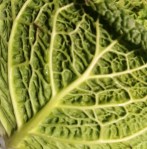
Green leaves are good for you, full of vitamins and minerals…. Don’t over cook them. Cabbages are lovely but they do smell. My hubby says they have mercaptans, a compound with a hydrogen and sulphur compound in them and Di methyl and tri methyl sulphide compounds. Sulphur is one of the essential elements in DNA and RNA, I’m not sure which amino acid it is in but they include Adenine, Guanine, Cytosene, Thiamine in DNA and Urasyl in RNA. (I learned this from my O level biology).

Thinking of school reminds me of school dinners and the cabbage smell from the kitchens! The cabbage was cooked till it was a wet soggy mess… Not hard to chew, but not nice.

Some plants and animals actually live on Sulphur compounds deep in caves and deep in the oceans because there is no light for photosynthesis. They can have anaerobic metabolisms if there is a lack of oxygen. Then the caves they are in can become acidic.

This was part of a discussion with my hubby, he’s the scientist, it’s interesting to talk things through. I do find things fascinating. (if any of this is wrong please tell me in the comments, I am not a scientist).