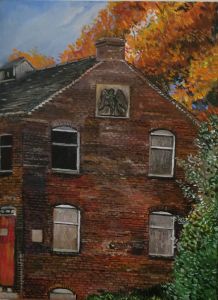
Old pottery

Old buildings in our city don’t always last. They are often left to rot. Trees and bushes grow out of brickwork, splitting the seams and unzipping the building. Making the ancient pottery a ruin.

Some places dismantle buildings. For example the Black Country Museum in Dudley, West Midlands, England. It often numbers each individual brick of a house, or factory, or school and rebuilds it within the grounds of the museum. It has working chain makers and underground canals that run through caves with fossils imbeded in the walls.

Meanwhile our industrial heritage in Stoke on Trent is gradually rotting, or is even burnt down by arsonists. We really should take better care of out industrial archeology even if it means donating it to the black country museum.
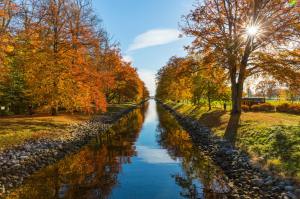
I stayed

What sacrifices have you made in life?

I was once offered a job out of this area. The problem was that it would mean moving away from my then boyfriend, later hubby. It was a reasonably decent job, well paid, illustrating the canals in the West Midlands of England. I would be part of a project to map, illustrate and record details of the massive canal network in the area. I really wanted that job… But it was too much of an upheaval. My boyfriend would not be able to come with me and I was scared to lose him. So I sacrificed the opportunity, and truly, I think it was the right decision for me. X.

Missing Walsall illuminations.

I remember Walsall illuminations over the years. We went most years as children, it was always wonderful to wander through the Arboretum, a huge park in Walsall. The lights as we called them usually ran from September and the leaves that were starting to change, were lit with coloured lights, some of the light displays were brought in from Blackpool. The beauty was that you could walk through the park, eventually coming out by the boating lake where you could see a spectacular light show, especially in later years when they used lasers and fountains. Part of the charm was that they kept some of the tableau for years. Like the clock family. These were clock shaped with legs and arms and the hour and minute hands formed the faces. They were fibre glass and painted bright colours. With bulbs placed in them to light them. There was always a fair on in the park so children could go on the rides and have candy floss. It’s ten years since ‘cost cutting’ closed them down. So sad……

Enamel kiln

DSC_0026Enamel kiln at Gladstone pottery museum, Longton, Stoke-on-Trent, Staffordshire. These burn hotter than a normal pottery kiln. This is to create enamel from powdered glass, fired about 1400°C. There is a working enamel kiln at Stevensons in Middlewich on the banks of the Trent and Mersey canal. Enamels are used from jewellery to bathroom ware. This is because it has to be stronger and not chip or crack.

The industrial heritage of this country is hanging on. Places like the Black Country museum in Dudley in the West Midlands give us a place to see how the past was. Manufacturing changes and evolves. Soon robots and AI might be the only way things are made. But despite the old dirty polluting past may have been bad, it still stirs memories and romantic ideas of the way things were.

X