Seeing more JWST pictures

What are you most excited about for the future?
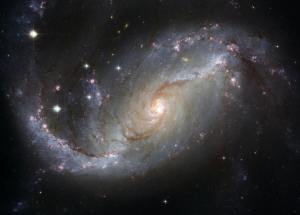
I love images of space, they excite my artistic imagination. I’ve just been watching The Sky at Night, a BBC TV programme about space and astronomy. They had a special programme about the James Webb space telescope as it is the second anniversary of it sending back the first images it took.

JWST has superceeded the Hubble telescope as the foremost in imaging distant stars, nebulae and galaxies. It can see back in time almost to the big bang. And that was 13 billion years ago. It has been able to image data that indicates exo planets, and on a few occasions has actually been able to work out the chemical constituents of their atmospheres through spectroscopy. It has also given us different ways to image our closest neighbours, the planets of the solar system, for example using infra-red filters.

I am really looking forward to seeing new images from JWST, and maybe even trying to paint some of them. X

I’d love a planet to be named after me!

If you could have something named after you, what would it be?

I love astronomy, I don’t know enough about it, but I learn what I can. Red dwarfs, white dwarfs, even brown dwarfs? Supernovae, Nova, planetary nebula. Planets. I probably learnt most of it from a TV programme called the Sky at Night, that used to be presented by Sir Patrick Moore. Since he passed away its been presented by Maggie Aderin-Pocock and Chris Lintott. But it seems to have disappeared off the TV recently with no plans to broadcast it at the moment! What? I’ve been watching it for decades.

You can also do citizen science like things on Zooniverse looking at Mars, or planets round other starts, or even looking for radio signals. I do find the whole thing fascinating. It’s worth looking at https://spaceweather.com for instance to find out about auroras, meteor showers, asteroids and Sunspots.

Ultima Thule

sketch-1547421982525

Excuse the picture. I tried to draw what Ultima Thule looked like.

I just watched a programme called “the sky at night” a BBC programme about the Nasa New Horizons mission that flew past a tiny planetoid called Ultima Thule (pronounced Thooley) on 1st January 2019. This was the same probe that sent back beautiful photos of Pluto a couple of years ago. Ultima Thule is only 21 miles long and the probe showed that it is made up of two lumpy spheres of material stuck together at a neck. There is only one clearish photo so far but they also know that it probably is a red colour. The pictures they published have been brightened to show details but the thing is probably a dark red colour.

The probe was apparently travelling at around 15 kilometres a second so it sped past Ultima Thule and is now several hundred kilometres past it and travelling further into the Kuiper belt (a ring of debris spread in a flat layer around the outer edge of the solar system). New horizons is nuclear fueled because solar panels would not work in the darkness so far from the sun.

It will take two years to stream all the data thay have collected from the probe back to Earth. This is the furthest world we have ever seen close up.

I love informative programmes like the Sky at Night. Its been on TV since the 1960’s I think. I have learnt a lot about astronomy over the years from it.