I’ve been wondering what to write for this prompt, and I realise that apart from basic addition (arithmetic) people struggle with calculations and formulas.
I was dropped down into the CSE group when I did maths at school. In the end that did me a favour. The exam was like a normal lesson and I got an o level pass.
I just about understood quadratic equations but never liked having to go through the stages of the calculations. I could follow logarithms, but never did calculus. My understanding of sine, co-sine and tangents left something to be desired.
But at least I understood numbers. There is something like dyslexia that some people have, it’s called dyscalculia. As people become aware of it, it might explain why they struggle.
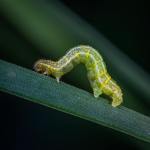
My friend posted a video of a caterpillar stretching and then the back end moves forward to meet tne front so the middle of it rises up in a hump.
I posted the question “Inchworm” and she agreed.
Then I remembered a song “Inchworm, Inchworm, measuring the daffodils?” from a film I watched in the 1960s. So I googled it. It’s actually “measuring the Marigolds”. It’s a film with Danny Kaye from 1952 about Hans Christian Andersen.
Wikipedia says:
The song’s lyrics express a carpe diem sentiment, with the singer noting that the inchworm of the title has a “business-like mind”, and is blind to the beauty of the flowers it encounters:Two and two are fourFour and four are eightThat’s all you have on your business-like mindTwo and two are fourFour and four are eightHow can you be so blind?
Subsequent verses include the lines “Measuring the marigolds, you and your arithmetic / You’ll probably go far” and “Seems to me you’d stop and see / How beautiful they are”
Loesser wrote a counterpoint chorus that, sung by itself, has become popular as a children’s song because of its arithmetical chorus:Two and two are fourFour and four are eightEight and eight are sixteenSixteen and sixteen are thirty-two
In the film, a children’s chorus sings the contrapuntal “arithmetic” section over and over inside a small classroom, dolefully and by rote, while Andersen, listening just outside, gazes at an inchworm crawling on the flowers and sings the main section of the song. Loesser loved the intellectual challenge of such contrapuntal composition, which he also did in other works such as Tallahassee.[1]


 Mallaband-Brown